
Premium Wine




By definition, natural wines technically occupy the ‘rare’ market. It is not commonplace or by an...Read More...
By definition, natural wines technically occupy the ‘rare’ market. It is not commonplace or by any means possible to make truly natural wines at scale, and at Winona we source wines from smaller producers whose quest for quality means smaller production, in order to honour the site and the purity of the fruit.
Truly natural wines occupy under 3% of total wine production, globally. Though this number is increasing as we see more people turn to the Earth, it’s a slow, slow game. What is a natural wine? Well, natural wines are made in the vineyard. They are the product of tireless viticulture in the pursuit of sustainability. Fruit is handpicked, often pressed without the aid of machinery, and no chemicals are added. They are a reflection of the year that was, as nature intended. So if there was a bushfire, a frost, an influx of hungry birds...so it goes. Small production, meticulous production, sometimes one-offs. In this way, it’s important to appreciate the wines you buy from Winona as a moment in time, something that exists for that moment, made with integrity.
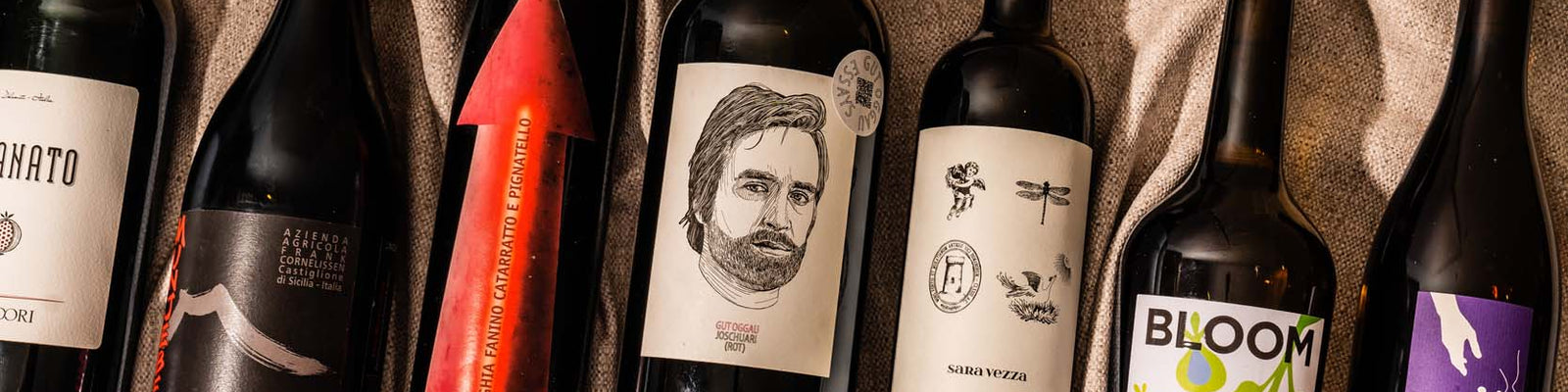
That being said, there are some that are more rare than others. As the wines reflect site, the maker, the ethos, they are impossible to recreate. Some winemakers have been figureheads for the pursuit of sustainability, for their specific styles of winemaking, their fortune to have a particular site or a particular grape. Ribolla from Gravner. Nerello Mascalese from Frank Cornellisen. Riesling from Gut Oggau. Macabeo from Matassa. Chardonnay from Ganevat...the list goes on. So, sometimes it’s a bit of a scramble to get that wine you heard about on the grapevine (or the Instavine)…you have to move fast! At Winona we secure allocations of some of the rarest natural wines on the market to get into your hot little hands, so if you’re into tasting “what it’s all about”, you will find something that will stay with you forever here.
Alongside ‘rare’, enter large format. Ever heard the saying bigger is better? It’s true. It is. Bigger bottles are better. We get it. You get it.
Large format bottles of natural wine aren’t just for celebrating (though they do the trick there, too). Sometimes it’s a mere practicality. Getting two bottles? Save yourself the trouble, and the glass – buy a magnum! One glass a night over the course of a week? Magnum. Need a vase? Get yourself a Jeroboam. Wedding party? A Salamanzaar will do nicely. You may have also noticed that the size of the bottles also has a neat name to boot. Does the fun ever stop? Do you need a magnum of Susucaru? We think so.
Quantity aside, there are some interesting facts about large format that the budding vinophile would be remiss to not have in their knowledge vault, read: brain. Large format bottles tend to age better – the surface area between the cork and the liquid is smaller, so less air can permeate, meaning they may take longer to age (about half the rate of a 750ml), but with a deeper, more complex, gentle effect. The glass is thicker too, meaning less light and heat can permeate, so if you don’t have a dark, cool cellar, your kitchen can be just as good! It is also because of this gentle ageing that the producers tend to put their best barrels or best wines into large format, so you can have quality assurance right there. As this is the case, they can also be rare...so if you’re a collector, flashes of BIG mean BIG collector’s item. In the world of natural wine and smaller production levels, there’s often not many magnums made. They can also be a sign of a special release.
But wait, there’s more. They can also be a bargain. Smaller producers sometimes pop their most smashable wines in these larger vessels in order to max out enjoyment and value. Sometimes you need 1.5L of rosato to park yourself on the balcony with.
Aside from this, they provide extreme aesthetic value. A trophy of your commitment to the world of wine, a glorious obelisk to a life of hedonism, or pleasure. The choice is yours.
Read Less...